How Are You?
In 2013, we brought the emotion diary to the phone. My idea for understanding our everyday moods became a product with 5,000 paying users.
- Client

- Year
- 2013–2014
- Time
- launch in 2013 · Polish release in 2014
- Area
- Products
What does “I feel better” actually mean?
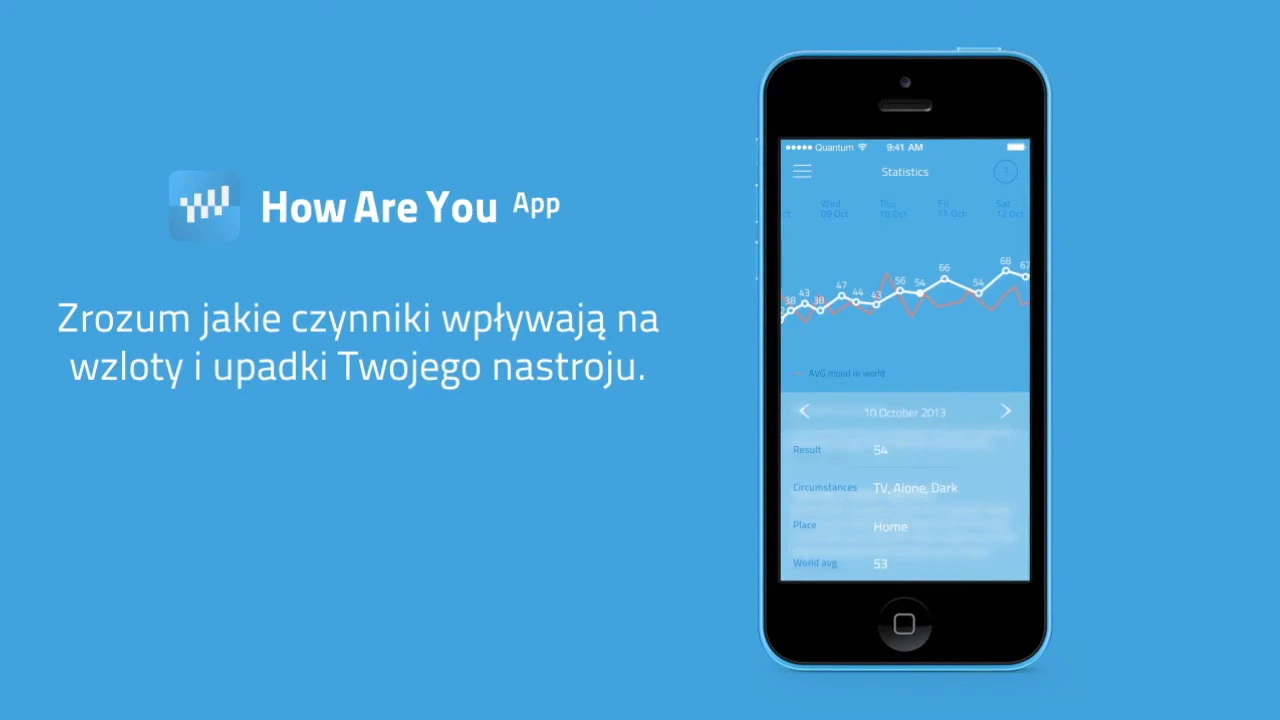
It is easy to say we have had a rough week. Remembering when things changed, and what was happening then, is harder. How Are You helped capture those moments: record emotions, add context and return to a personal history.
The first version reached the market in 2013. In 2014, we released a Polish version.
My role: originator, founder and product owner
I came up with How Are You and was its founder and hands-on product owner. I led its direction, from the initial idea and feature choices to launch and conversations with users, media and partners. We built the app at Quantum Lab with Krzysztof Cywiński and the team.
I wanted the phone to help people understand emotions and share them as easily as photos. In 2013, that meant finding our own way to bring psychology, a daily habit and a new form of communication into one product.
A minute to check how you feel
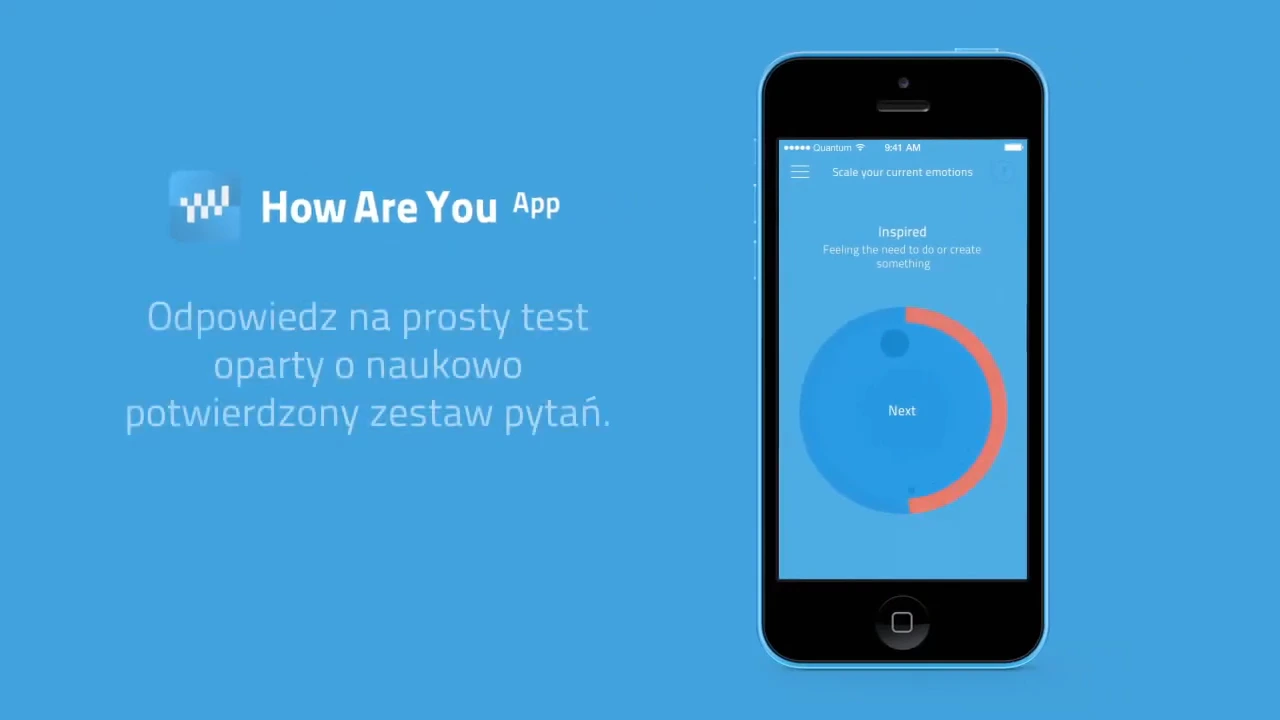
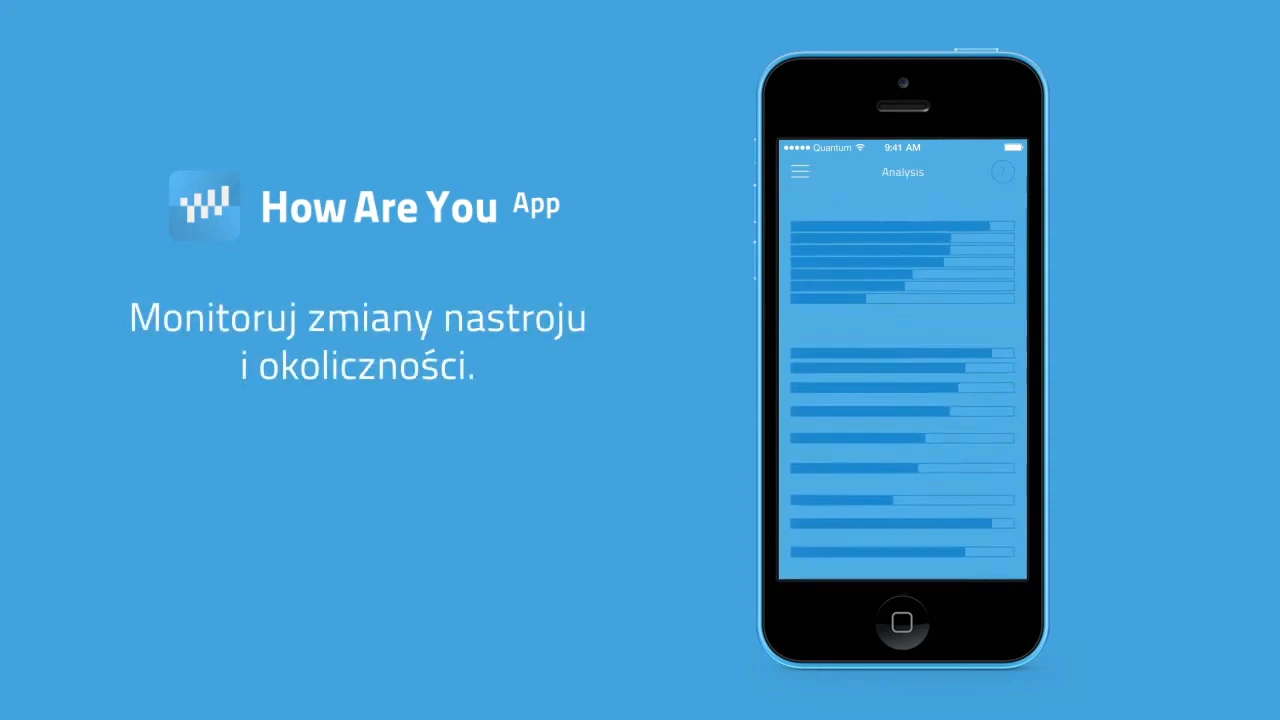
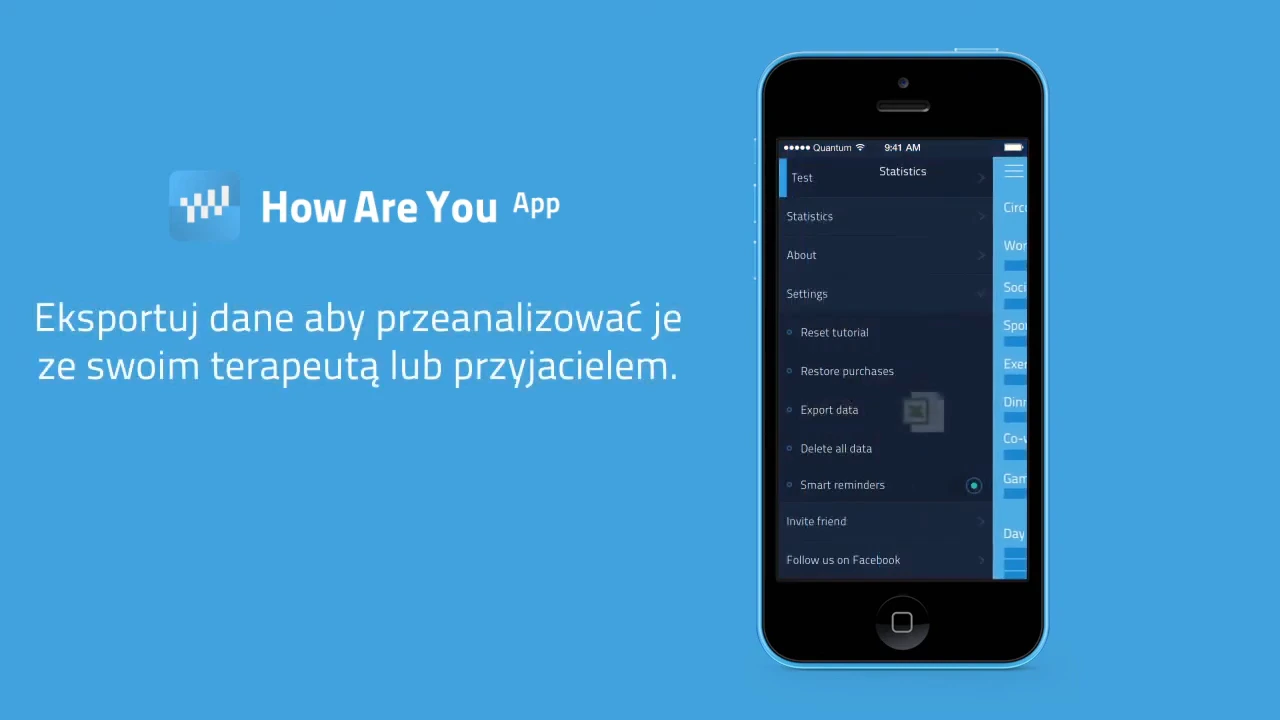
Users rated the intensity of emotions in a short test, added situation tags and followed the results on a chart. Reminders helped establish a routine. Export made it possible to take a mood history to a therapist or share it with someone close.
We designed the app to support self-observation and conversations about wellbeing. Today I am revisiting a similar need in Oczko, a product for my own family.
Users, an award nomination and media coverage
In January 2014, How Are You was named a finalist for Best Health App in the sixth annual Best App Ever Awards. That same month, Forbes covered our idea in “Nastrojeni na globalny biznes”. In May, I presented the app on “Świat się kręci” on TVP1, Poland’s national public broadcaster.
Our reach extended beyond Poland. Forbes reported that most downloads came from the US and Canada, despite no promotion there. We also presented the product at Pioneers Festival in Vienna in 2013 and Mobile World Congress in Barcelona in 2014.
A product before widespread app subscriptions
5,000 people paid $19.99 for access. That confirmed a need, but one-off purchases could not fund ongoing maintenance and development. We eventually withdrew the app.
The timing matters. Apple did not open auto-renewable subscriptions to all app categories until 2016. We were building a product for regular use in 2013, before that payment model was widely available. The lesson stayed with me: the user need and the way a product funds itself have to fit together.
Result
5,000 paying users, a Best Health App nomination, and coverage in Forbes and on Polish national TV.
The app is no longer available. The images are frames from its original presentation.